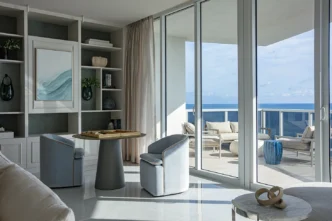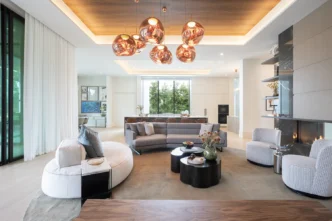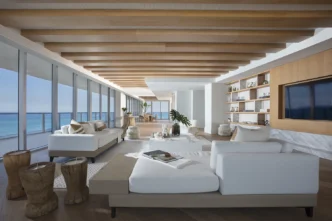
Every design style has a language of its own. For example, minimalism speaks in clean lines and open space, while industrial interiors expose the bones of a structure. Meanwhile, rustic design leans into the natural and the heavy: thick timber, stone, wool. Ultimately, each one presents a clear point of view.
Coastal design is no different, however, it is often reduced to a formula. In fact, that formula, over time, has come to stand in for coastal design without actually capturing it.
What does coastal interior design actually look like?
Coastal interior design is not about seashells, navy stripes, or driftwood accents. At its best, it captures how the ocean feels — the depth, the shifting light, the quiet — through color, texture, and materials that work together as a complete system. When those decisions are intentional, the result is a home that reads as coastal without ever looking themed.
In our work renovating oceanfront homes across South Florida, we have seen the same instinct play out again and again: white walls, crisp blue accents, linen everything. Those choices are recognizable; and when our clients came to us with a 3,820-square-foot luxury condo renovation in Bal Harbour, we knew they deserved something further from the expected.
En beginning was not with a mood board, but with what was right outside the window: a natural cove, direct ocean views, and a landscape that shifts in light and character throughout the day. That setting shaped everything.
From a View to a Design Lenguage
What you notice first from the beachfront balcony of this residence is not a single color. It is a set of distinct characteristics: depth, reflection, contrast, texture. The surrounding cove moves — light changes, shadow and brightness share the same frame, water reads differently by the hour. One of the most defining decisions in our process was letting that observation become the foundation of the design brief.
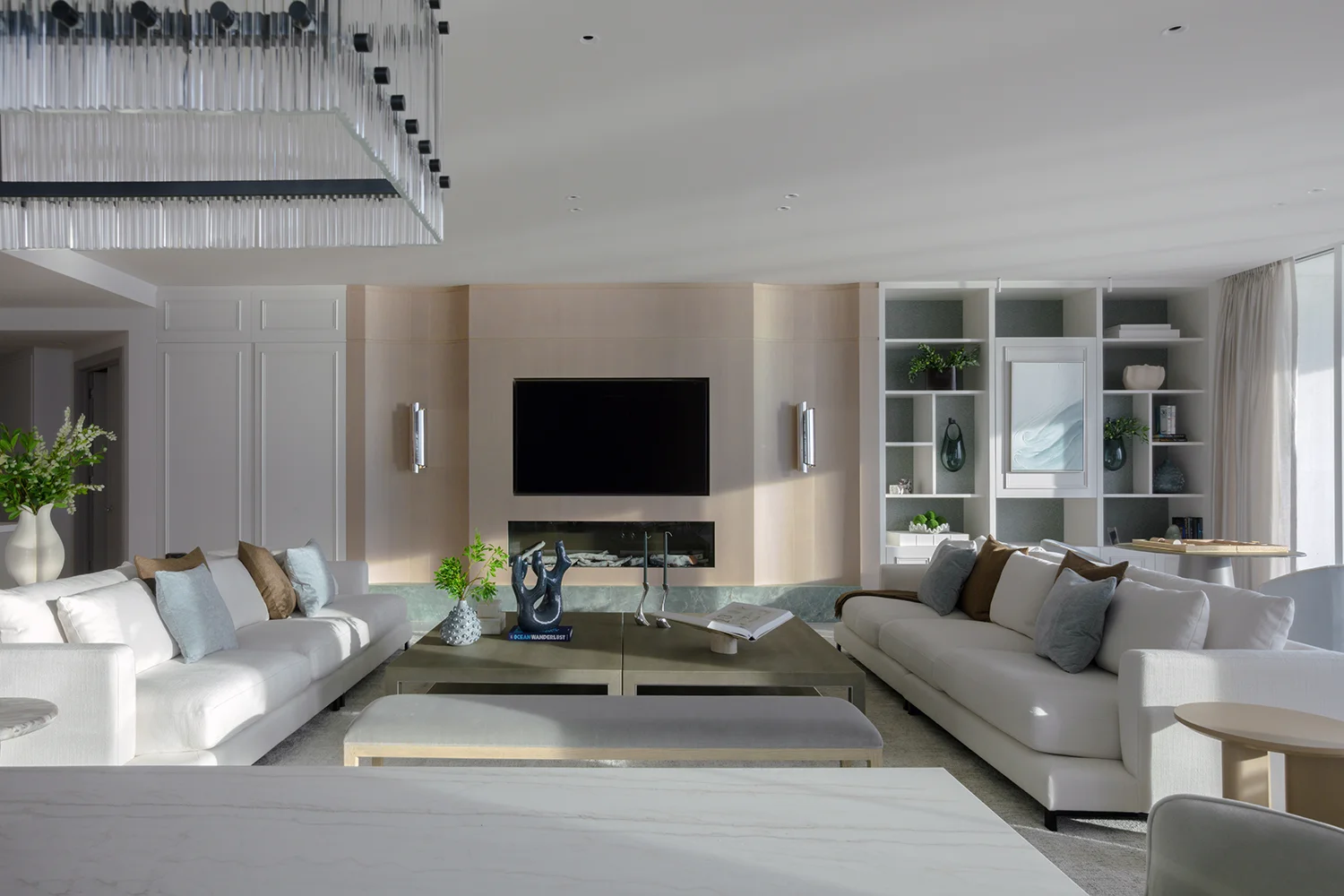
From there, the team developed Cove — a concept created specifically for this home — to translate those characteristics directly into the material and color decisions of every space:
“The material palette for this residence was inspired by the natural cove visible from the condominium’s beachfront balcony. A restrained palette of natural stone, oak wood, textured finishes, colorful accents, and reflective surfaces creates a layered, timeless interior that feels calm, refined, and deeply connected to its coastal setting.” — DKOR Interiors Team.
Four Intentions, One Palette
Every color selected for this Bal Harbour residence was chosen because it does something specific, not simply because it looks coastal.
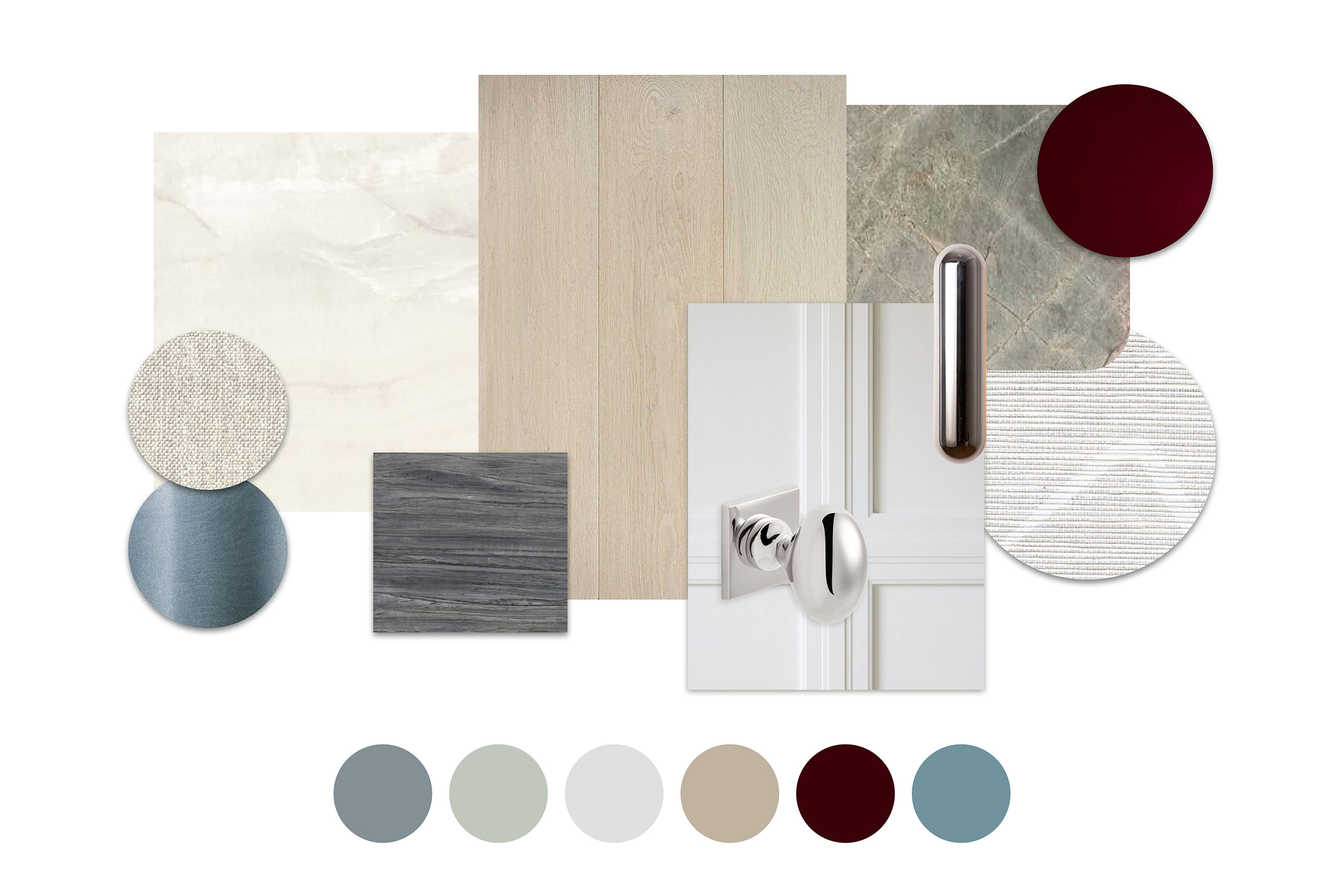
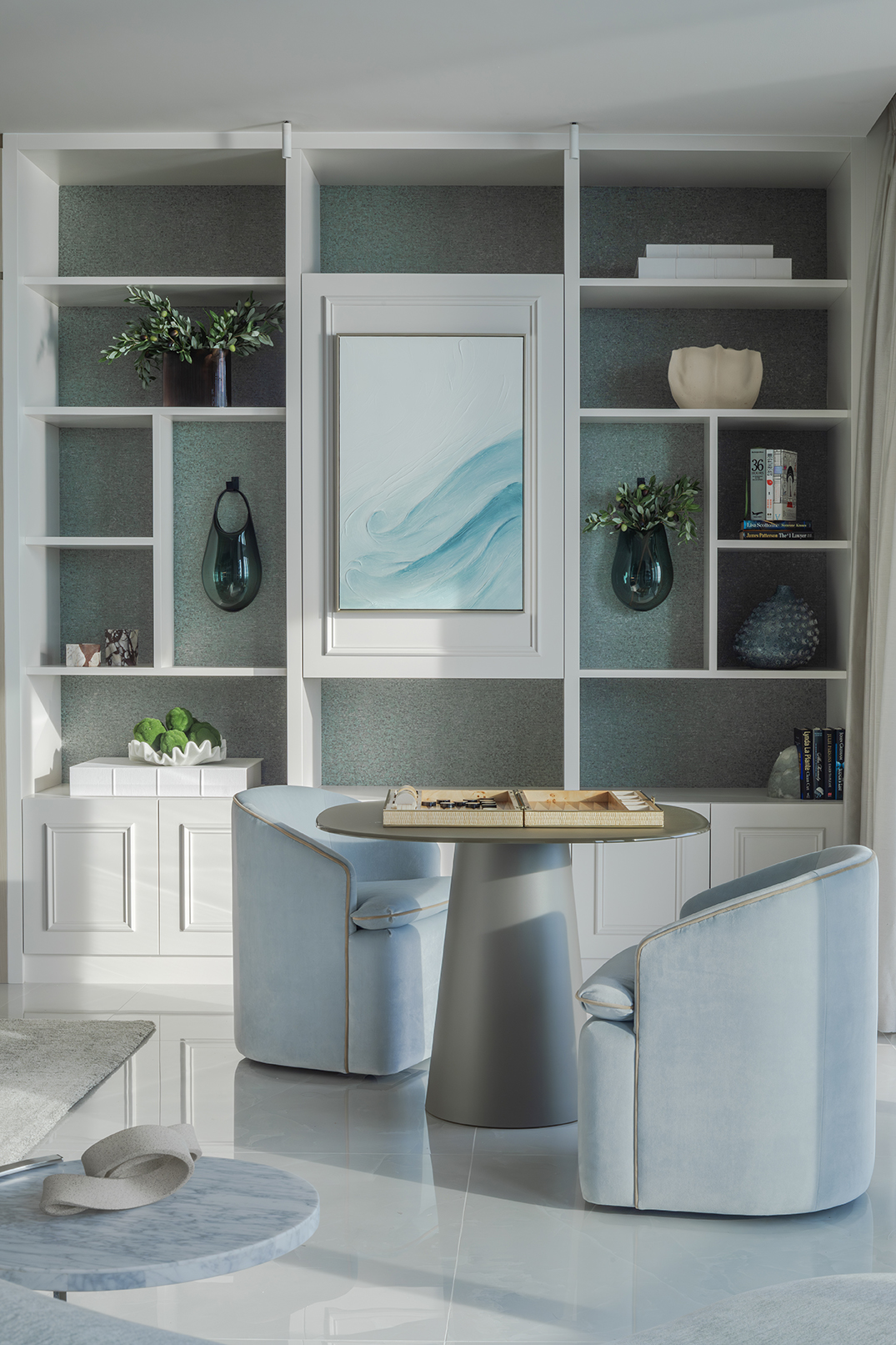
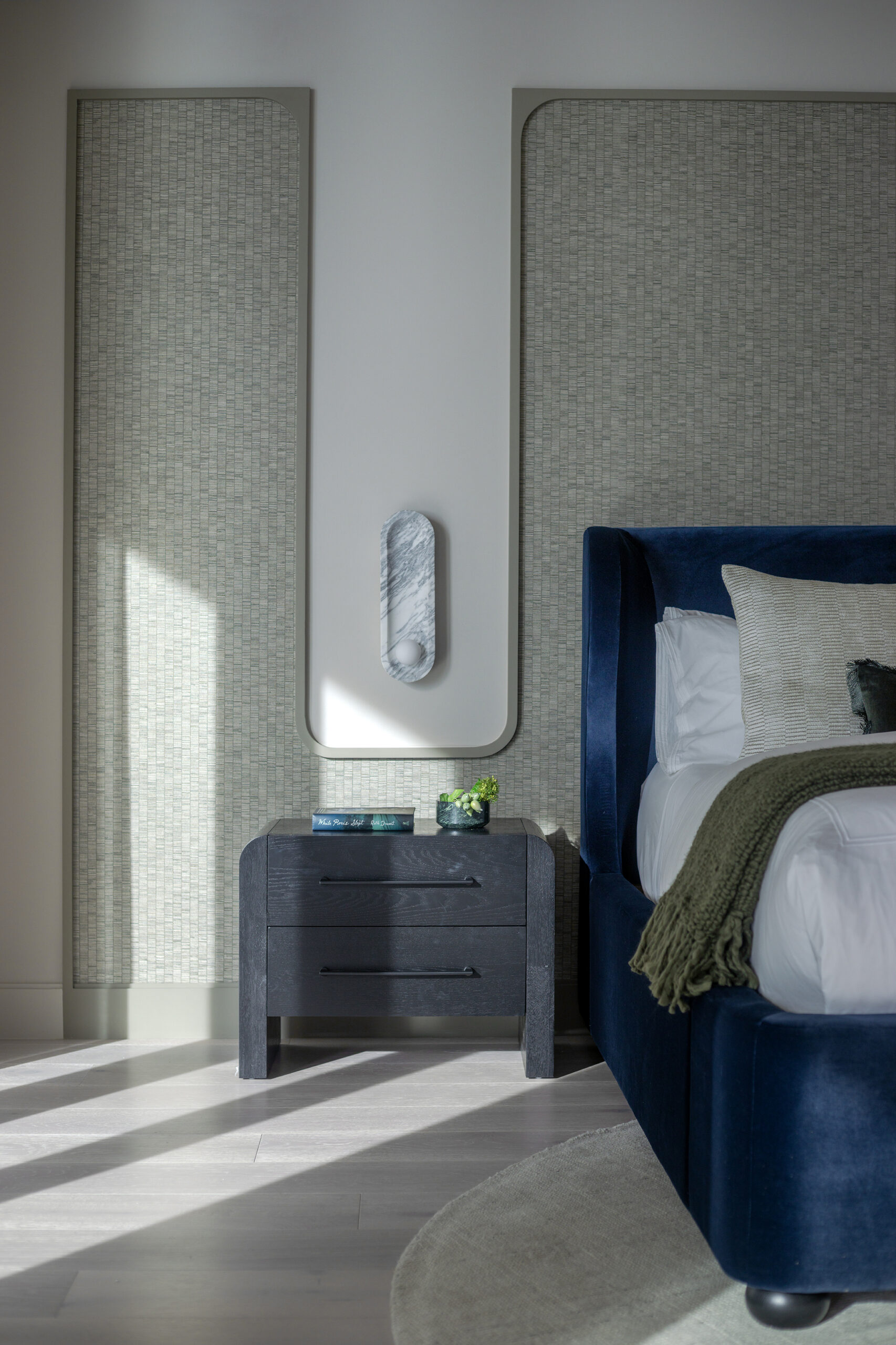
The palette for this residence works on two levels. The primary tones — sage green, warm beige, taupe, and cool gray — establish the overall mood: calm, layered, and grounded in the natural character of the surrounding landscape. But to keep that palette from feeling flat, burgundy was added — a way to create contrast without breaking the balance. Every color below was chosen with a specific role in that system.
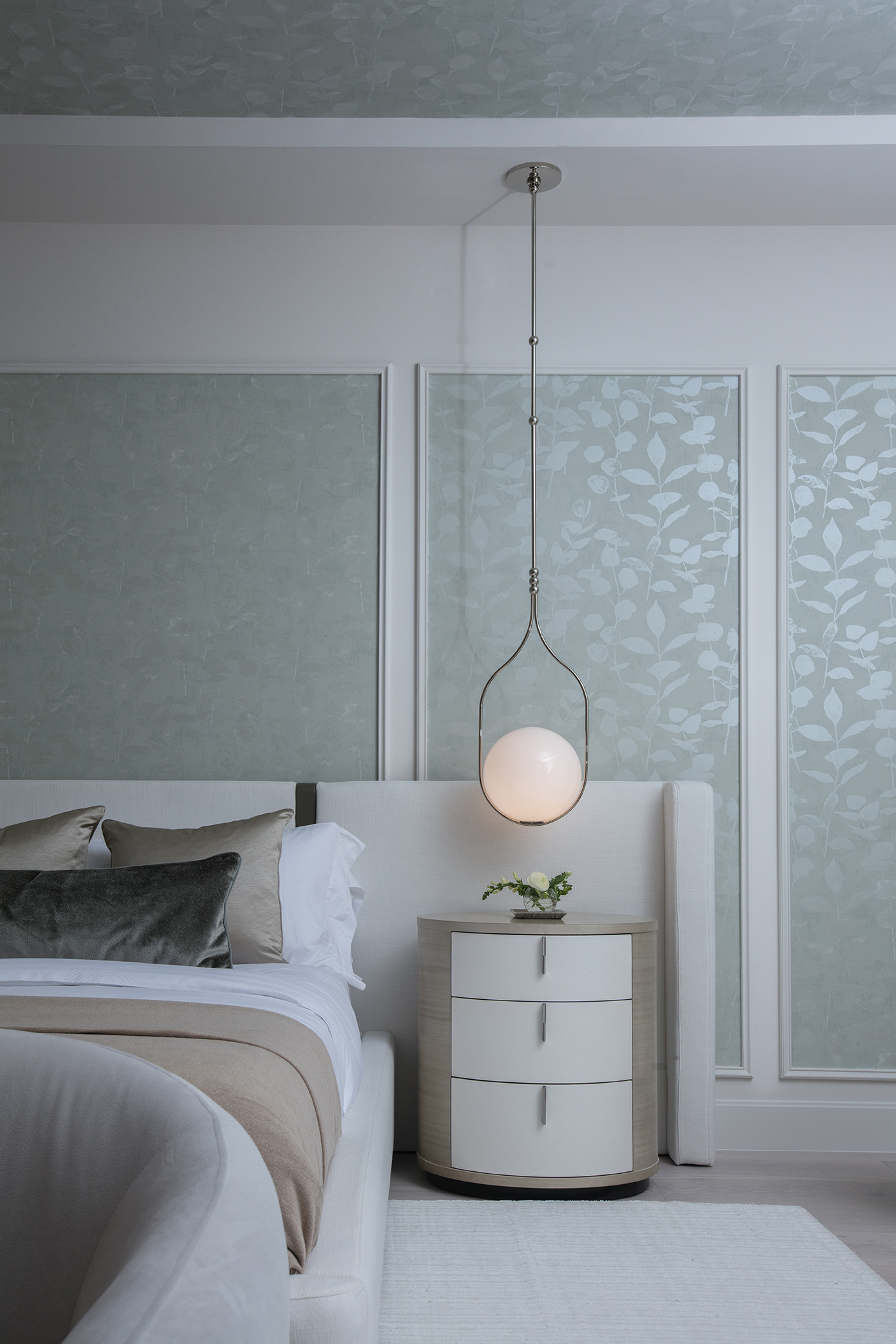
Sage green y warm beige anchor the primary living spaces. Together, they read as calm and grounded, much like the line where sea grass meets sand. Neither is a statement by their own; both feel inevitable once you are in the room.
Taupe y cool gray introduce the shadow and depth that keep the palette from reading flat. Without them, the sage and beige would be pleasant — but unresolved.
Burgundy is the contrast. Used selectively, it does what a dark coral does in an otherwise quiet landscape: it commands attention without disrupting the calm. One accent in this register is enough to make the full palette feel deliberate.
Materials That Earn Their Place
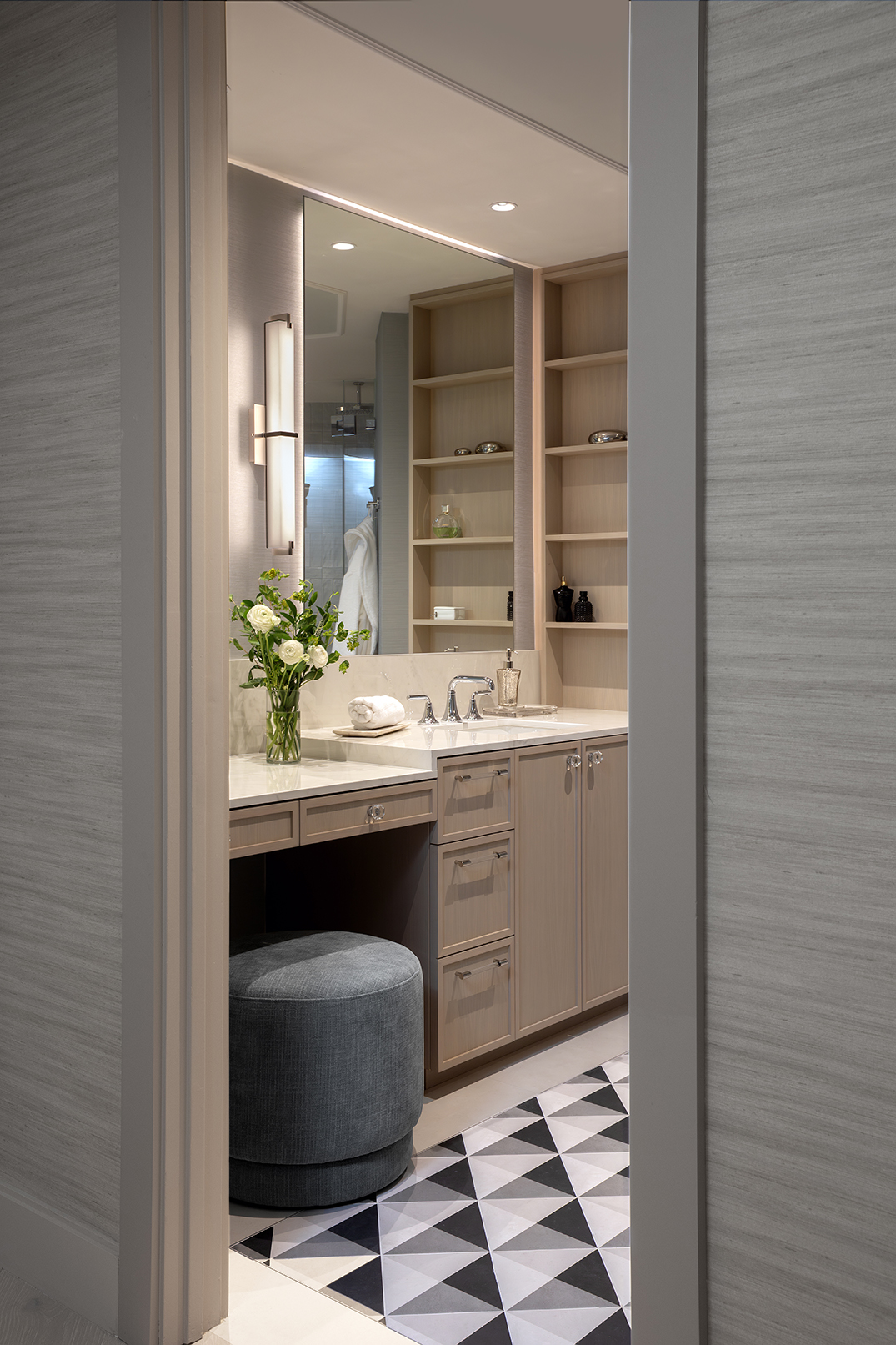
Color sets the tone, but it’s the materials that carry it through the room. That distinction is central to how the DKOR design team approaches every modern coastal interior design decision. Curious which materials went where? Specifically, here is how each one earned its place in this home:
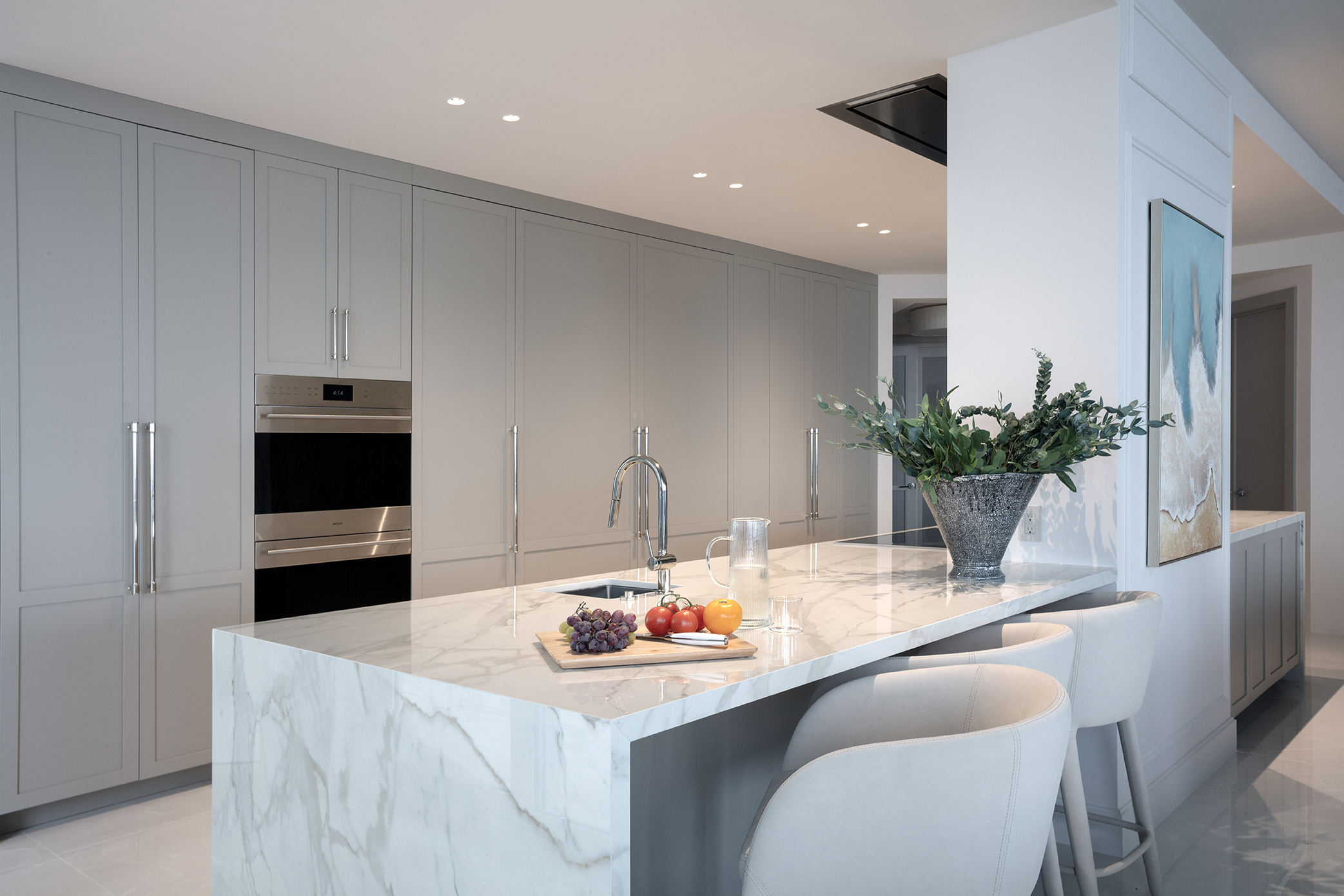
- Cream marble became the vehicle for reflection, capturing how water surfaces feel alive throughout the day.
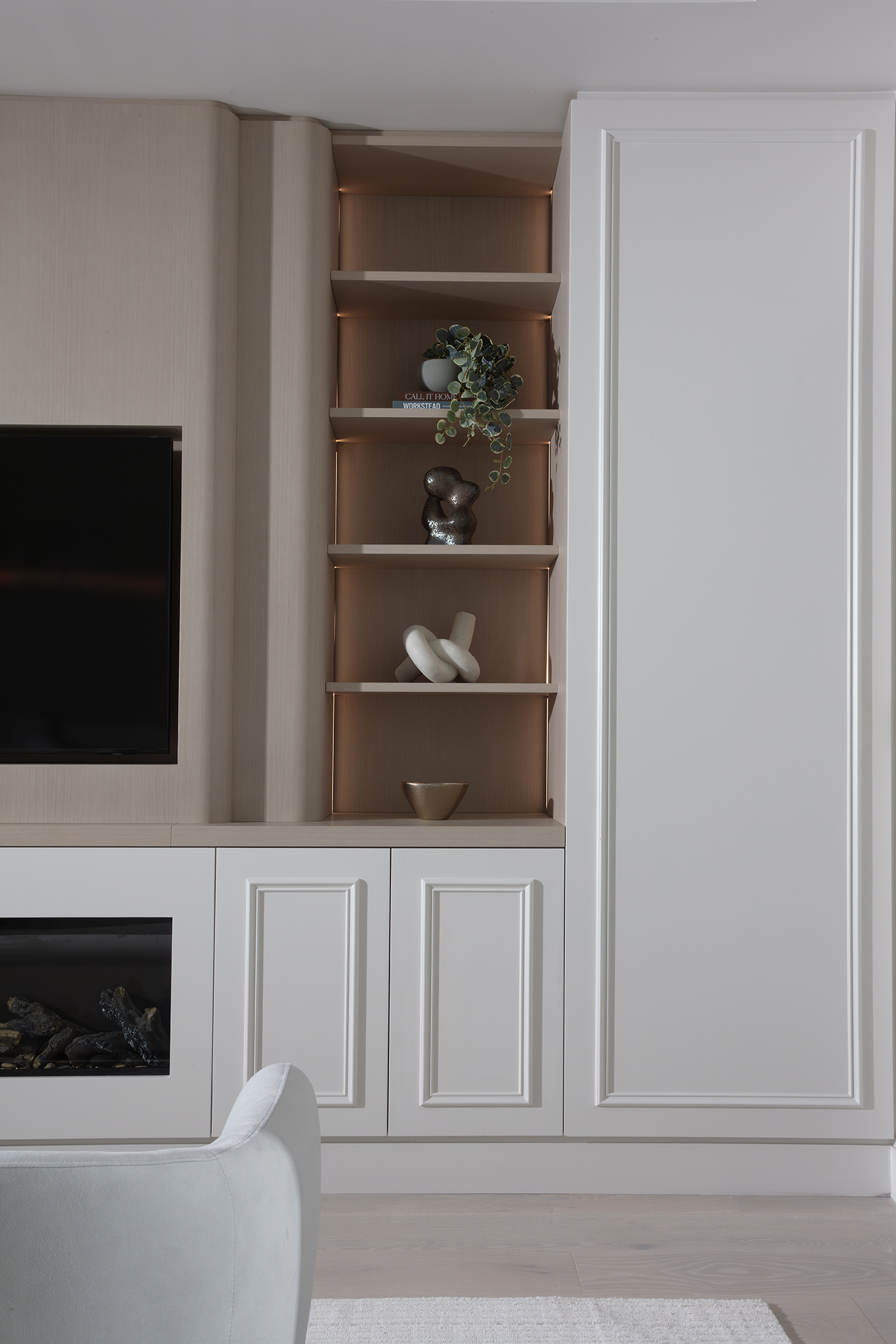
- Wheat lacquer brought warmth and a smooth finish, anchoring furnishings without competing with stone.
- Engineered wood introduced organic texture, connecting the interior directly to the natural landscape.
- Brushed brass added richness without excessive gloss.
- In addition, wainscoting running throughout the residence gave each room an architectural rhythm and quiet structure.
How do you do coastal interior design without it looking same?
The most successful coastal interiors are built around mood, not motif. At DKOR, that means working with a restrained palette, deliberate layering, and a direct response to the specific landscape each home faces. The result feels personal to where it is — and nothing like what you have seen before.
If you are considering a coastal renovation in South Florida and want a home that reflects where it actually is, not where it is expected to be, we would love to talk. Contact us to start the conversation.
Entradas relacionadas
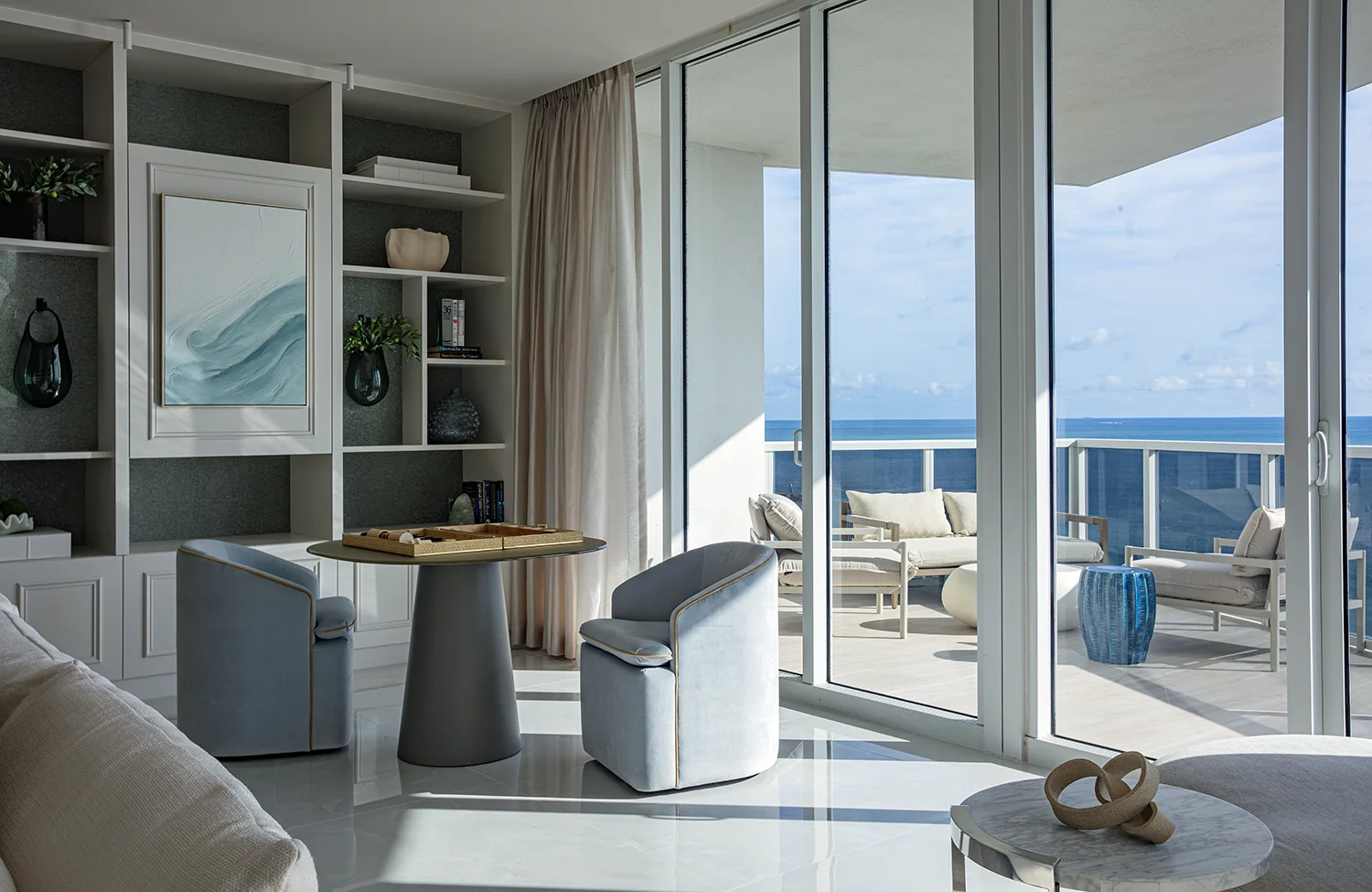
Small Spaces: Home Decor Ideas for Empty Corners and Unused Areas
When designing a home, it's natural to focus on the largest spaces, from the kitchen to the living room and…
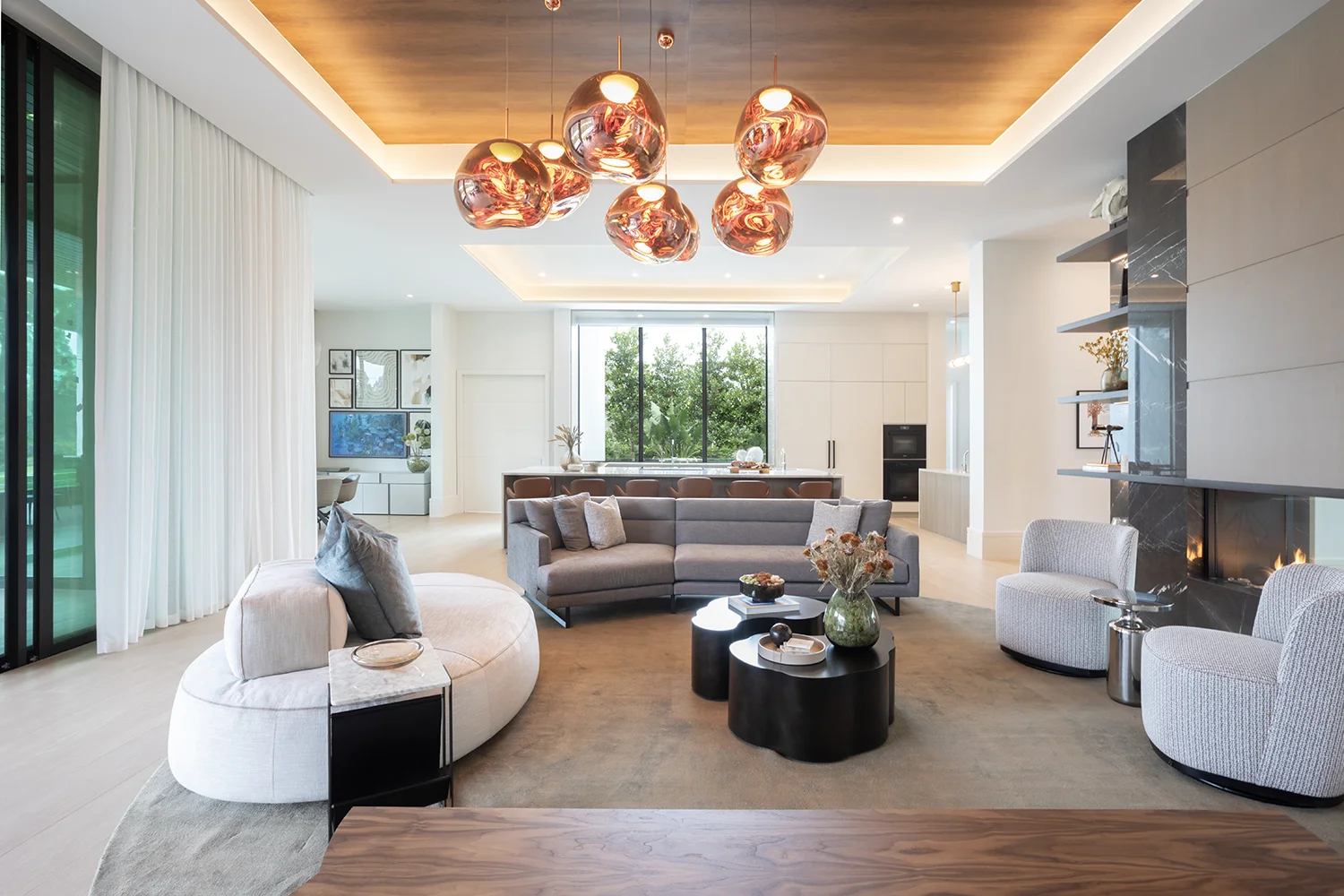
The Importance of Space Planning: Why Every Great Home Starts With the Floor Plan
When you begin an interior design project, whether you've just purchased a new home, are renovating an existing one, or…
A Bal Harbour Condo Remodel: A Serene Oceanfront Escape
Nothing brings us more joy and pride than seeing our client relationships grow and remain strong over time. Being trusted…